ARCHIEVEMENT
AHCH has so far achieved the following:
Parenting and Supporting Children
AHCH has 45 acres of land which were donated by the local community and in due course it managed to acquire 35 more acres of land which now make a total of 80 acres. In March, 2009 the institution successfully completed the construction of a building having 24 rooms that can accommodate a total of 88 boys and girls evenly. Also, it has all necessary amenities such as toilets, kitchen, dining rooms, a recreational hall and rooms for the patron, matron and nurses. Moreover, the institution enjoys reliable supply of both power and running water.
The total number of sponsored pupils and students currently attending lower and higher education is 67, including one disabled child. The girls are 35 and the boys are 32. Four children are in universities, seven are in different colleges and three are in vocational training schools. The remaining 52 are in primary and secondary schools while one is not in school. Twenty seven (27) have already graduated from various universities and colleges and succeeded to be either self-employed or employed in different capacities such as education managers, accountants, secretarial positions, police and teachers in various organisations.


Empowering AHCH’s Staff and Local Community
AHCH successfully initiated and implemented a programme to assist its staff and the local community to build and own modern houses and improve farm productivity. In partnership with Smiles of Hope as a major financier, 18 staff at the Children’s Home and two families from the local community identified to have poor houses, were assisted to build modern houses. The programme also successfully increased maize productivity from 0.6MT/acre to 2MT/acre. With regard to the farm programme, AHCH implemented modern farming techniques on its farms which act as demonstration ground and now the knowledge has successfully been disseminated to the neighbouring communities.
Pre-Primary School
Construction of a modern building with partitions inside which include three classrooms capable of accommodating 100 pupils has been completed. However, currently it has only 39 pupils.
This modern building has all necessary rooms including a kitchen, a dining room, two offices, a store, two resting rooms and ten toilets. The management is in the process of getting the building connected to reliable power supply and running water.
Primary School
The construction of primary school buildings is in progress after successfully receiving a loan facility from CRDB Bank amounting to TZS 250,000,000. The registration process of the school which currently is partly housed in the existing buildings, with about 17 children, is going on very well.


Secondary School
The construction of buildings for a secondary school, in the name of Angel House Secondary School, was successfully completed and the opening took place in 2011. Its performance in the last 12 years has been exemplary. It has been ranking amongst the best top ten schools within Mara region in successive national examinations. The school is manned by professional and qualified teachers of different levels.
The school’s infrastructure include:
· Classrooms which can accommodate 320 students. Currently there are 270 students who include 119 girls and 151 boys.
· Physics, Chemistry, Biology and Computer laboratories.
· 3 dormitories for boys.
· 8 dormitories for girls.
· A kitchen.
· 2 stores.
· A dining hall (still under construction and expected to be completed within the current five-year strategic plan).
· 11 offices for different departments.
Appropriate dormitories for both boys and girls that will address requirement for the next five years are in the current Strategic Plan.
Farming
Farming activities are carefully carried out by the institution within about 30 acres of land that has been identified to be suitable for cultivation.
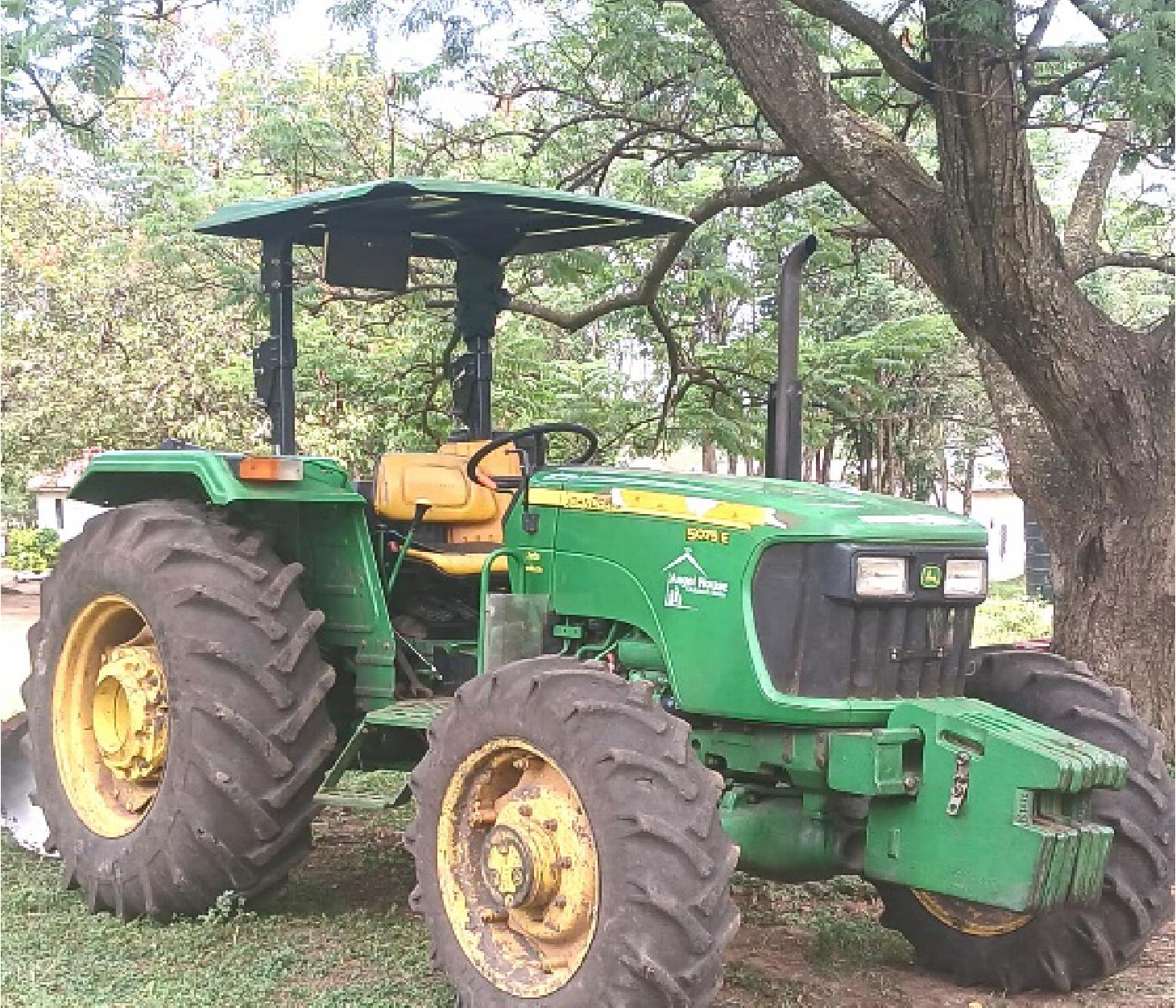
With a greenhouse in place, a tractor, a maize milling machine and trained staff around, various agricultural related activities are taking place at the institution. These include, but are not limited to:
· Maize and beans farming
· Maize milling machine
· Poultry farming
· Bee-keeping
· Goat rearing
· Vegetables and fruits growing (horticulture)
Vocational Training Centre
The foundation for the construction of a vocational training centre having three classrooms has been completed. As the institution continue to stretch its abilities trying to ensure that it strives to accommodate 100 students, a number of development well-wishers have been approached to donate materials and money for the construction of the vocational training centre which is envisaged to be completed and operationalized during the current strategic plan ending in 2027.
Residential house for institution’s visitors
This is a three self-contained bedrooms house with a lounge, kitchen and store. It accommodates the institution’s visitors on duty. Usually they are provided with meals which are prepared within the house because it has all necessary facilities.
Administration Block
This building accommodates offices of the General Manager and the Children’s Home and Human Resource Manager. It has also a Boardroom and requisite facilities for office based services. An appropriate Administration Block that will address the next five years requirements is in the current Strategic Plan.
Initiatives to address insufficiency of health services
AHCH runs an infirmary on its premises to serve its community. However, first aid kits have also been made available at various points. Moreover, AHCH intends to construct more health facilities within the community and to provide services at affordable rates. The thrust will be on Dental Care, Mother and Child Care; and also clinics for non-communicable diseases. AHCH shall further implement disease prevention programmes, such as WASH, which is explained hereunder.
Initiatives to curb poverty and unemployment problems
The income generation activities which have been mentioned have created permanent employment for supervisors; but also seasonal and casual employment opportunities where there is the need to regulate labour deployment with levels of activities. AHCH has established demonstration farms and undertakes to share with the surrounding communities on smart agriculture and income generation practices to enhance productivity in a sustainable manner. Using modern farming technologies, AHCH managed to raise maize farm productivity from 0.6MT/acre to 2MT/acre.
Improvement on productivity in agricultural related activities is envisaged to go in tandem with vocational training and entrepreneurship development. It is with this forecast that AHCH is constructing a Vocational and Entrepreneurship Centre to serve both the Home and the community. AHCH shall endeavour to add value to agricultural produce that include bee-keeping products using simple, affordable and easy to apply technologies. This is anticipated to be an initial step to entice local community-based children and adults to undertake projects that will eventually enable attainment of the AHCH objective of advocating “economic development activities to the community”.
Promotion of Water, Sanitation and Hygiene (WASH)
Basically, AHCH is proactive and, consequently, implements the “National Guidelines for Water, Sanitation and Hygiene for Tanzania Schools - 2016” to ensure availability of sanitation facilities for the schools, based on standards for kindergarten, pre-primary, primary and secondary schools. It further endeavours to provide sanitation and hygiene education across the AHCH community. It is planned that shortly, AHCH will promote WASH practices to other schools and elsewhere within the surrounding communities by implementing sensitization and outreach programmes. By so doing, AHCH shall engage communities for behavioural and cultural changes.
Initiatives to curb environmental and climate related problems
AHCH has taken concerted initiatives involving itself in Environmental and Climate Related activities. The initiatives were based on the “Mara River Wetlands Integrated Management Plan (IMP) 2018-2022 compiled by the Mara Regional Administration”. The plan was deemed imperative to attempt to mitigate challenges being faced by the wetlands, including proliferation of plans to construct dams in the basin; planned intra-basin water transfers in the upper catchments; unsustainable land use and management (overstocking, overgrazing, deforestation, pollution) coupled with climate change that will continue to present a major drawback for communities living within the Mara River Basin. The plan provides a timely roadmap for all stakeholders, including communities, technical experts, Non-Governmental Organizations and Governmental players on how to work together to resolve the lurking challenges.
AHCH has already prepared and submitted a Concept Note to co-operate with the Mara Region Administration to:
Identify and suggest agricultural activities amongst the available options (crops, livestock, fishing, and others) and suitability for the available land and eco-system;
Invest in and promote “Climate-Smart Agriculture”; undertaking a series of awareness creation activities to promote Climate-Smart Agricultural Practices and Technologies;
Compile and facilitate implementation of specific Climate-Smart Agricultural Projects enhancing organic farming, fishing, livestock and enabling tree planting and natural tree regeneration to substantial climate change mitigation.
Create employment out of environmental and climate change related activities by investing in value addition, formulating an out-growers scheme contract to enable farmers benefit from a guaranteed market and subsequent technical support (financing, farm inputs and agronomists’ and other experts’ services).
In another development, AHCH prepared a plan to participate in the conservation of Utimbaru Escarpment by reforestation through natural regeneration. This is based on the fact that non-smart agricultural practices on escarpments, cause land cover change, accelerated soil erosion and sedimentation within the catchments. Rapid regrowth and the density of the papyrus swamp encourage practices of setting fire to burn them to clear access for fishing, or/and promote other activities such as entrapment. Due to the advent of climate change, increased and intense rainfall and evapotranspiration bring about frequent floods and siltation. Furthermore, tere is increased pressure from human populations, settlements and activities such as overgrazing, unsustainable agriculture, overfishing, increased demand on water resources, deforestation and overharvesting of wetland products. Deforestation, for instance, has affected the Utimbaru Escarpment a great deal.
In the light of the foregoing, AHCH envisages to determinedly participate in environmental and climate related activities such as agroforestry; forests conservation and/or reforestation where appropriate; renewable energy; economic use of energy; value addition to non-wood forest products; smart agriculture, fishing and other livelihood practices; and income generation, improvement of livelihood and poverty alleviation out of environmental and climate change related activities.